
This semester, I have been studying Criminal Procedure, and one of the topics that has particularly caught my attention is the use of pretrial identification procedures in criminal investigations. At first, eyewitness testimony seems like one of the most straightforward and classic forms of evidence. Someone witnesses a crime, identifies the person responsible, and tells the jury what they saw. But the more I have learned about the identification process, the more I have realized just how complicated it can be, and how easily something that seems so reliable can go wrong.
Eyewitness identification can be incredibly powerful at trial. A witness pointing to someone in a courtroom and saying, “That is the person who committed the crime,” can carry enormous weight with a jury. But human memory is not perfect and is almost always biased. Because of this, the rules surrounding Due Process in the procedure of identification are very strict. The circumstances under which someone witnesses a crime, the amount of time that passes, and especially the way police conduct an identification procedure can all influence the validity of an identification.
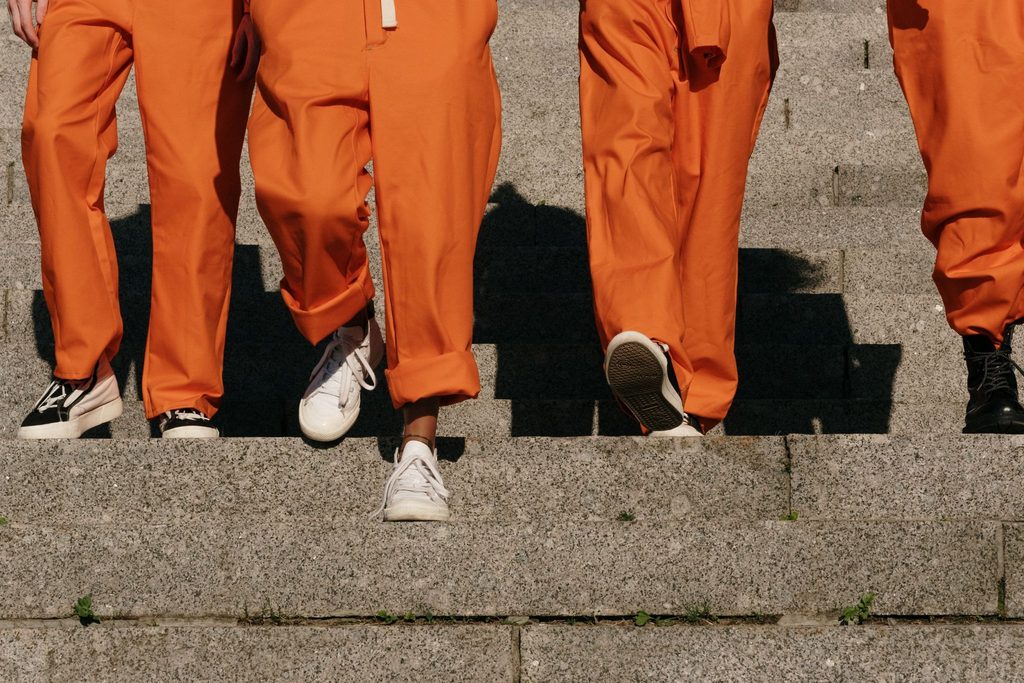
When I think of a pre-trial lineup, I think of the classic 1990s sitcom where someone gets robbed in New York, and the matter is quickly resolved with a jail cell identification. Police commonly use lineups, one-on-one showups, and photographic arrays to ask witnesses to identify suspects. While these procedures can be key investigative tools, they also create opportunities for suggestiveness. A lineup might be arranged so that one person stands out from everyone else, even down to the color of their shoes. An officer might make a comment that unintentionally signals which person the witness should choose. These small details are important.
The Constitution does provide protections against these problems. The Supreme Court has recognized that unnecessarily suggestive identification procedures can violate the Due Process Clause of the Fourteenth Amendment. In Stovall v. Denno and Foster v. California, the Court addressed the dangers of identification procedures that create an irreparable risk of mistaken identification. What I found particularly interesting was how rarely the Supreme Court has actually found a due process violation in similar cases. Foster remains the only Supreme Court decision in which the Court overturned a conviction on the basis of a drastically unfair identification. That is a striking number when you consider how influential eyewitness identification can be in determining guilt.
The reason that my course has taught me is largely that courts give significant weight to the reliability of an identification, and only when the procedures were impermissibly suggestive, and the police had a strong hand in setting it up, do they reconsider. In Neil v. Biggers and Manson v. Brathwaite, the Court established that judges must look at the totality of the circumstances, including how long the witness had to observe the person, the witness’s level of attention, the accuracy of the initial description, the certainty of the identification, and the amount of time that passed before the identification occurred. Essentially, even if police used a suggestive procedure, the identification may still be admitted if the court determines that it is sufficiently reliable.
These cases made me question just how much protection due process actually provides in this area. On paper, the rules the court establishes sound very rigid. But in practice, there are several hurdles a defendant must overcome when a witness is reliable. This can be very frustrating to observe, but I understand the reasoning behind these decisions. Eyewitness testimony can be valuable, not every imperfect procedure should automatically result in evidence being excluded, and police do need investigative tools. But I cannot help wondering whether courts are giving too permissive a standard.
This is yet another area where Criminal Procedure has only furthered my frustration with our criminal justice system. A witness can be completely sincere and still be wrong, and bias often influences human reaction. And when an identification is made through a suggestive process, what someone actually remembers and what they have been influenced to remember can become difficult to separate. By the time a case reaches trial, a confident identification is key even if the procedure was flawed.
I will likely forever be working through these issues as a law student and a future lawyer. But studying identification procedures has made me appreciate how important constitutional protections are, as well as the right to an attorney at pre-trial events. The real question we should continue to reflect on as a community is whether our current standards do enough to prevent unreliable evidence from contributing to a wrongful conviction.