
I have always held a firm belief that the most important branch of our government is the judicial branch. Of course, each branch holds its own value and power, but the Supreme Court has the ultimate authority to decide what is constitutional and what is not. The Constitution is the core of our governmental system, and with the Supreme Court acting as the arbiter of its meaning, they hold immense power over every aspect of our government.
This 2026 cycle in the Supreme Court brings several important decisions. As I am currently in law school and taking Constitutional Law, my understanding of the impacts of these decisions has only grown. My entire experience in Con Law so far has essentially been a 1,000-page book of Supreme Court cases that have shaped the course of American law. Each case builds upon the last, and each decision has ripple effects that extend far beyond the courtroom.
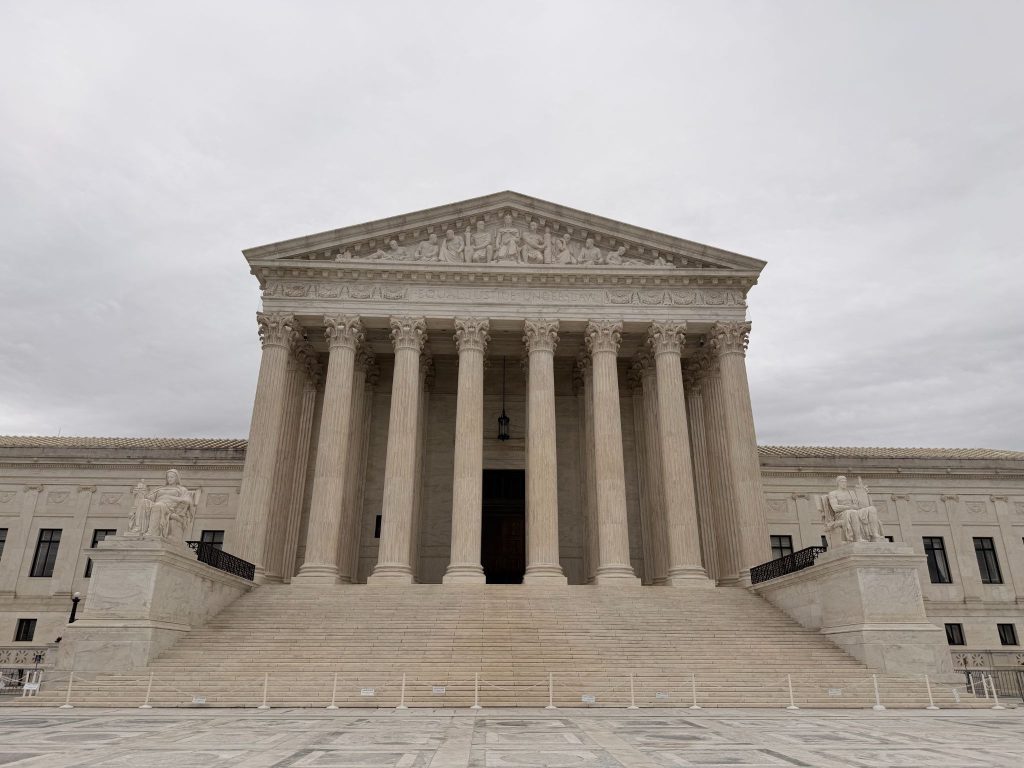
This month, the Supreme Court is hearing and deciding a challenge to birthright citizenship, a doctrine that has long been foundational to our nation, built on immigration and opportunity. They will also hear a case about racial discrimination in jury selection, an issue I recently studied in Strauder v. West Virginia (1880), which held that the right to a trial by jury includes the right to a jury selected without racial discrimination, a true jury of your peers. The fact that this issue is still being litigated today is shocking to me. It is a stark reminder that constitutional principles are not static. They will continue to be defended and interpreted again and again.
Further, the Court is deciding cases on temporary protected status and a massive copyright infringement claim. All of these issues are incredibly significant in our nation today, and all of them touch citizens in different ways. That is why the Supreme Court holds such immense power, they can shift the direction of our nation. The hearing on birthright citizenship, in particular, feels especially heavy.
It is important for all of us here in the United States to keep our eyes on the Supreme Court and the decisions they make. It is almost certain that what they decide in the coming days will be written into textbooks for future law students and lawyers to read, analyze, and apply for years to come.