
This week, my sister came to visit my Constitutional Law class. She is a middle school teacher, so I thought it would be fun for her to be able to experience another kind of classroom. I can’t say if she enjoyed it or not, but what came from that visit was an understanding that these issues are so relevant to every person in this nation, not just the law students of America.
She had never stepped foot in a law school classroom before, never briefed a case, but she truly understood much of what was being discussed because of how alive the doctrines we address are. The subject that day was the “separation” of powers, specifically the distribution of authority within the national government and the scope of presidential power. On paper, it sounds structural, and it’s the most basic government concept you learned in your third-grade American history class! Article I vests legislative power in Congress, Article II vests executive power in the President, and Article III vests judicial power in the courts. But as law students, we have to understand how that system truly works. As my sister sat in class with me, she got to hear all about the scope of presidential power, a topic that rests on many of our minds every day.
Does the Vesting Clause in Article II merely authorize the President to execute laws passed by Congress? Or does it confer a broader, undefined reservoir of executive authority?
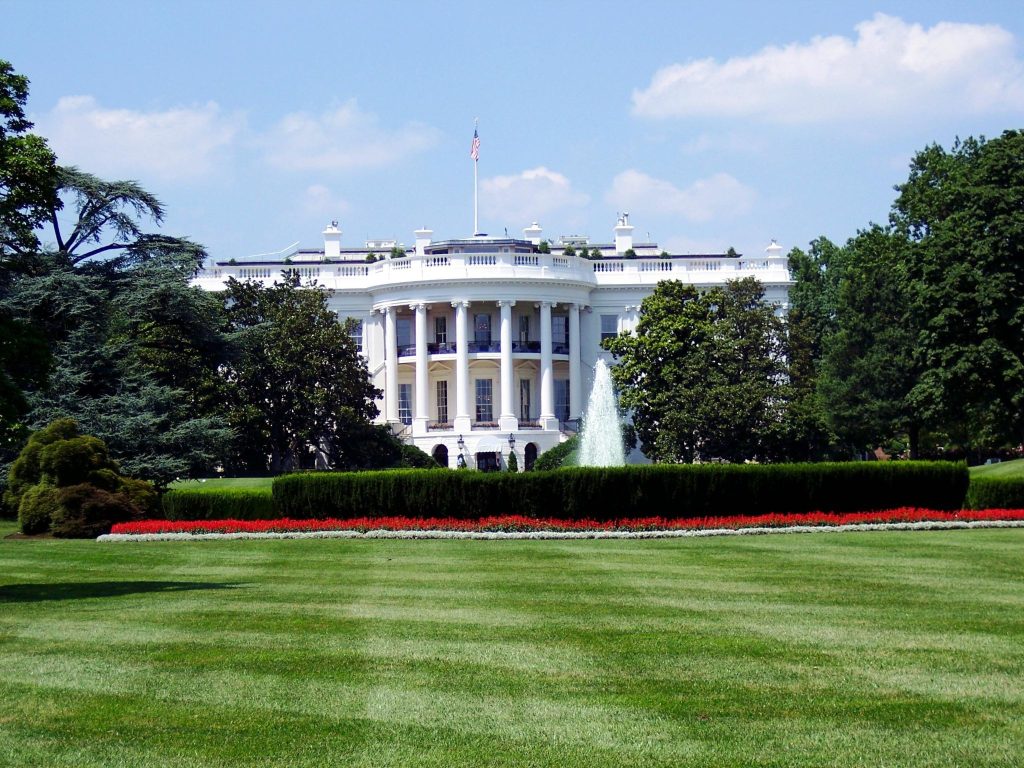
We examined the Hamiltonian view that wishes to give the president more access to enumerated powers. Then we contrasted that with Madison’s position: the President has no powers beyond those expressly listed. Then we discussed a case which defines the “zones of the president’s power, Youngstown Sheet & Tube Co. v. Sawyer. For the everyday student, like my sister, names like Hamilton and Madison, and President Truman are all highly recognizable and accessible.
We also discussed the modern administrative state, how Congress creates agencies under statutes like the Administrative Procedure Act, and how agencies both enforce and adjudicate law. We discussed the nondelegation doctrine and the major questions doctrine. Though these concepts may be high-level, they are not foreign to us all. The issues we discussed still remain unresolved and are up for debate in the Supreme Court frequently. As my sister listened to this, she leaned over at one point and whispered, “So this is basically everything we see in the news?” And she wasn’t wrong.
As I carry on in my Constitutional Law class and my future career in law, it is moments like that, watching someone outside the legal bubble immediately understand the real-world implications of a discussion, that I look back on. It has me thinking, is it a good thing that society has become so attuned to the separation of powers because of recent presidential actions? On the one hand, awareness is healthy. On the other hand, it is unsettling that many Americans now learn constitutional structure through crisis. It is also my hope that coming generations can remember those names and that history, as my sister did, and stay better informed. When someone who has never entered a law classroom can sit there and feel the weight of such a constitutional and heavy discussion, it reminds me why I am there in the first place.